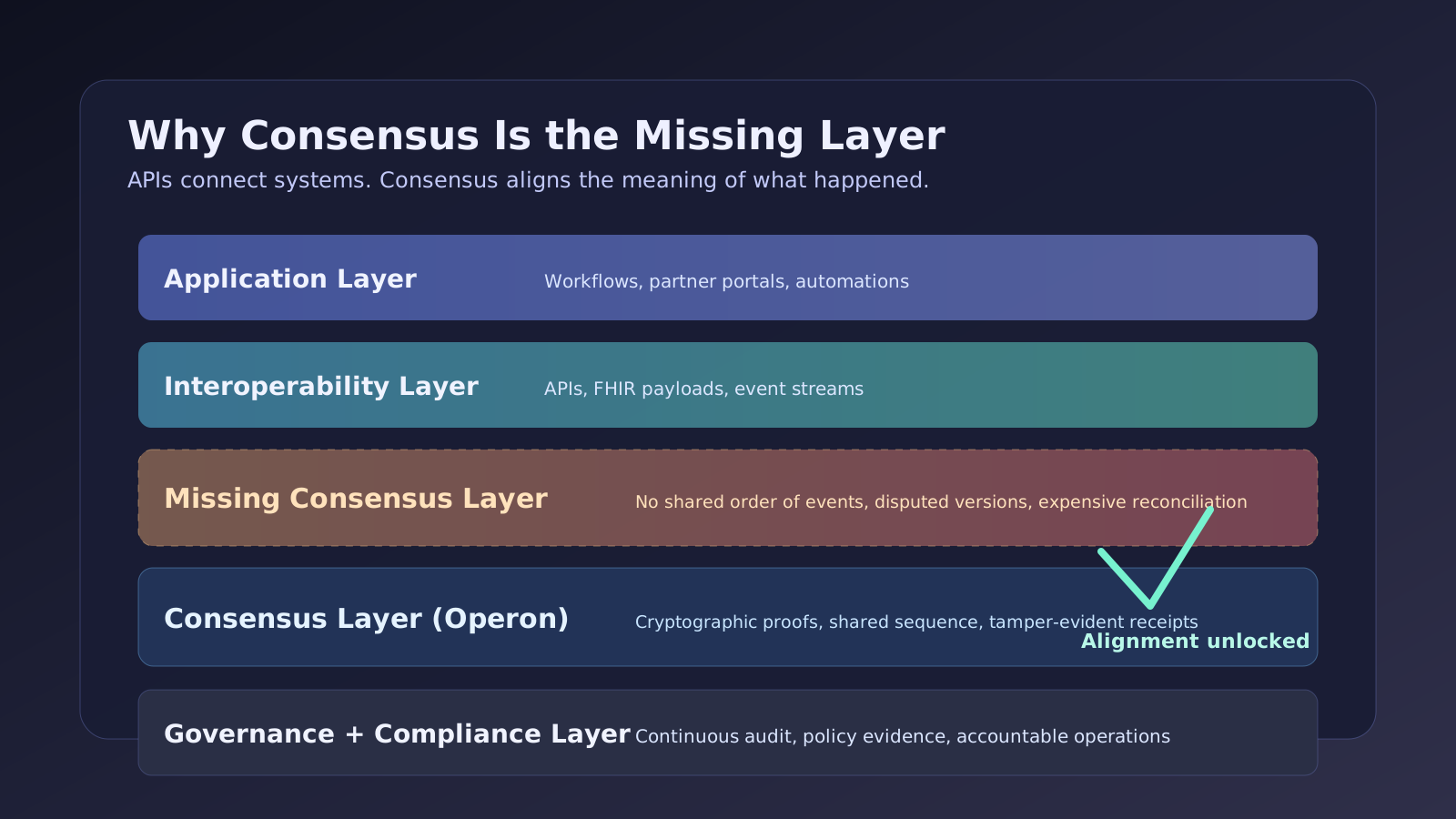
The Short Version
Companies share data constantly through APIs, brokered feeds, and dashboards. On paper everything lines up, yet when an integration misbehaves everyone is guessing. Logs never quite match, screenshots do not agree, and every team has a different truth. Interoperability without consensus is just synchronized optimism.
A consensus layer gives every participant the same receipt. When a transaction is recorded, the proof travels with it. Instead of trusting that nothing changed in-flight, each system can verify that everyone else saw the same event.
The Problem Nobody Talks About
Enterprise integrations feel like email: you send data, someone receives it, and everyone assumes fidelity. There is no shared audit trail, no neutral log, and no way to prove that the message consumed downstream is the one you actually sent. Disputes turn into escalations, point-in-time exports, and awkward meetings.
Interoperability should be more than delivery guarantees. It should include a shared proof that the event happened the way everyone thinks it did.
Consensus — Without the Crypto Baggage
Consensus is not about coins or mining rigs. It is a coordination primitive: multiple independent systems agree on the order and content of events. Enterprises need that agreement without the volatility of public networks. With the right guardrails, consensus can act as a trust fabric under existing APIs.
Real-World Example: Healthcare and Finance
A healthcare claim touches providers, intermediaries, and payers. A loan passes through underwriting, risk, origination, and capital markets. If any system mutates a field, the entire story changes. Consensus gives each participant a proof — a timestamped, signed receipt that confirms what was processed and when.
A Thin Layer of Trust Under Everything
Imagine every critical event is stamped onto a shared, append-only timeline. Sensitive fields stay private; only hashes and metadata leave the system boundary. Everyone can verify the event without seeing the payload. The result is fewer disputes, faster reconciliation, and a better foundation for automation.
Permissioned Consensus — Practical, Not Ideological
Public blockchains proved the math works. Enterprises need a governed version: predictable fees, private membership, and compliance hooks. Operon.Cloud delivers that layer as managed infrastructure — no miners, no tokens, just verifiable agreement.
What Changes When You Add Consensus
- Disputes disappear faster. Shared receipts end reconciliation deadlocks.
- APIs become self-verifying. Every event includes proof of origin.
- Innovation accelerates. Teams stop revalidating data and start building on top of it.
Lessons from the Field
Consensus is not only a technical layer; it reshapes how teams collaborate. When everyone can check the same source of truth, trust becomes a property of the platform instead of an act of faith. Interoperability finally means more than “the request returned 200”.